Measuring Guide
Measure once. Choose storage that belongs in the space.
A thoughtful storage plan begins with accurate dimensions, realistic clearance, and a clear understanding of how the area is used. This guide helps you record the details that matter before selecting bins, baskets, drawer organizers, shelf risers, and everyday space-saving essentials.

Four dimensions create a reliable fit.
Storage should support the routine, not simply fill the opening. Record each dimension at more than one point when walls, shelves, or cabinet interiors may be uneven.
Width
Measure the narrowest usable width from side to side. Check front, center, and back when fitting organizers inside cabinets or drawers.
Depth
Measure from the front edge to the first obstruction. Account for cabinet frames, plumbing, hinges, outlets, and door closure.
Height
Measure the shortest vertical point. For stackable storage, include the full stack and the space needed to lift or slide each piece.
Clearance
Leave practical breathing room for movement and access. A precise fit should still be comfortable to use, clean, and reset.
Build a simple measurement summary.
Enter the inside dimensions of your drawer, shelf, cabinet, or storage zone. The summary adds a practical clearance reminder so you can compare products with more confidence.
Measure the space the product can actually use.
Check the details that quietly reduce usable space.
- Measure inside the frame rather than across decorative trim or the outer cabinet face.
- Check whether hinges, pipes, drawer slides, shelf supports, or handles project into the usable area.
- Confirm that doors and drawers can close when the organizer is filled and positioned as intended.
- Allow space to lift lids, pull baskets forward, remove bins, and reach items at the back.
- Use the smallest of repeated measurements when a wall, shelf, or cabinet interior is not perfectly square.
- Keep heavier storage lower and make sure the supporting surface is appropriate for the intended load.
Different storage zones need different measurements.
The opening is only one part of the decision. Consider how the organizer moves, what it holds, and how often you need to reach it.
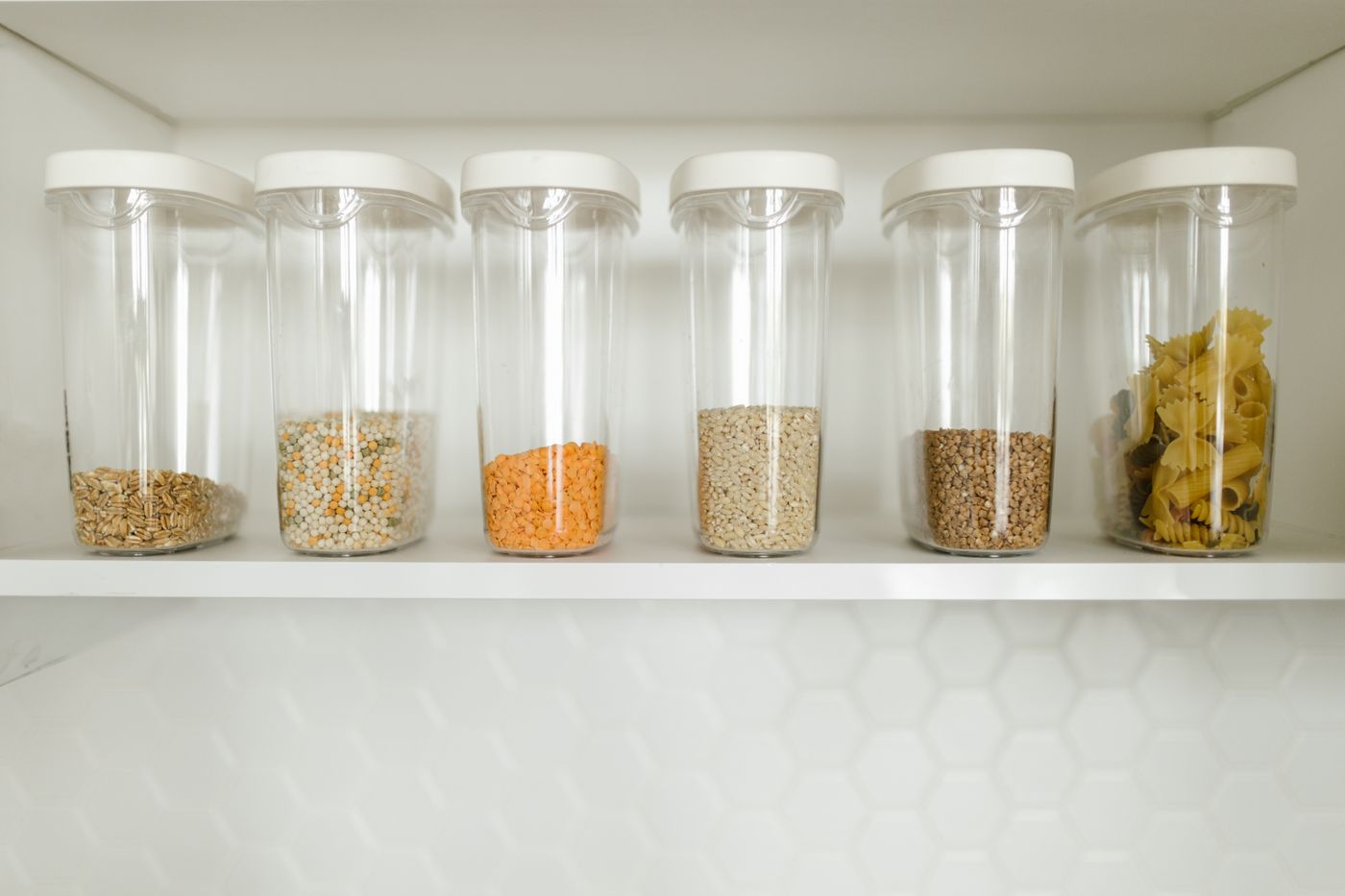
Account for shelves, doors, and daily reach.
Measure each shelf separately. Cabinet frames and adjustable shelf hardware can create different usable widths within the same unit.
- Record shelf-to-shelf height.
- Check door and hinge clearance.
- Leave space for lids and scoops.
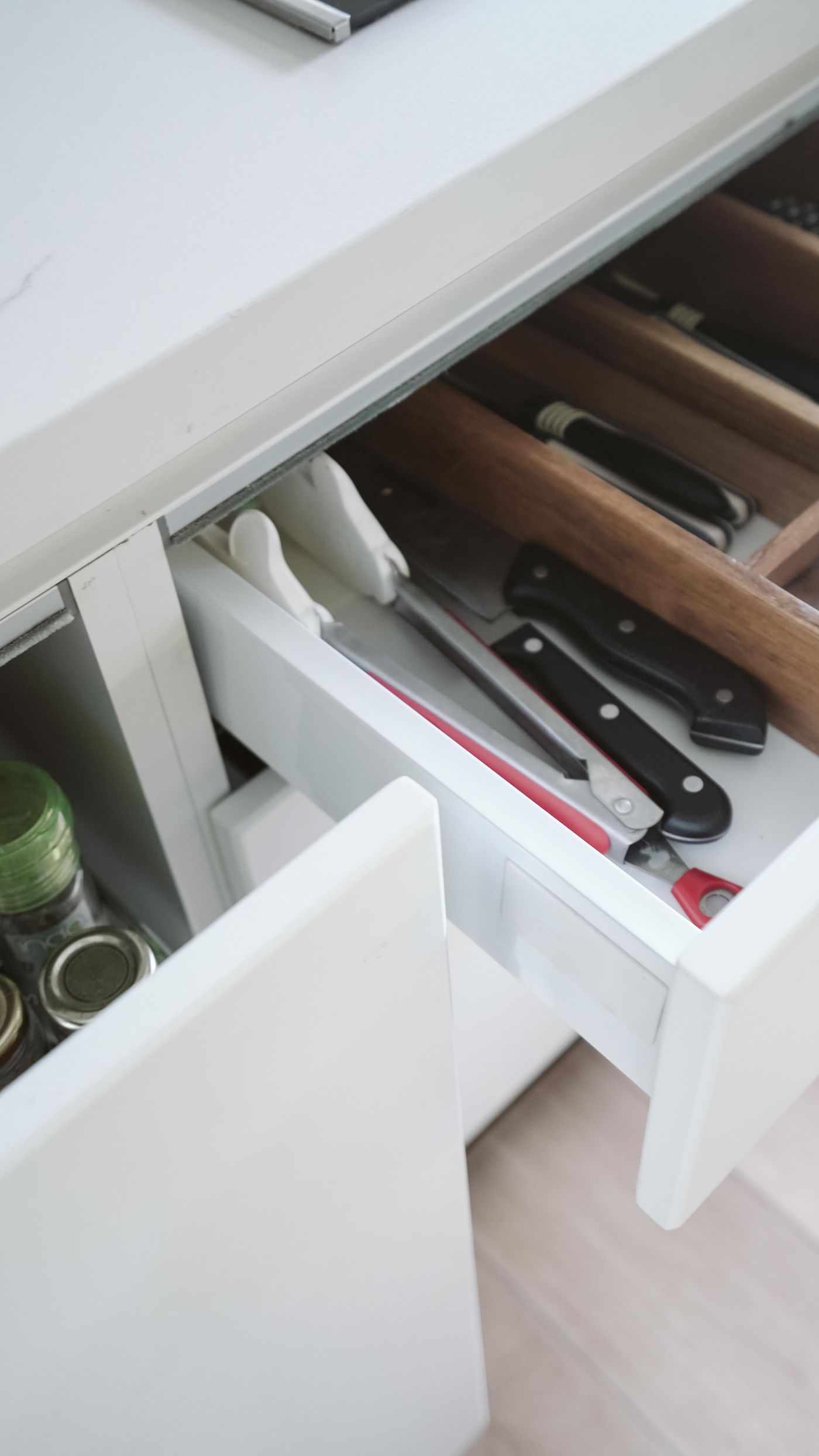
Measure at the narrowest point inside the drawer.
Drawer boxes often taper or include hardware along the sides. Measure below the top edge where the organizer will actually sit.
- Check side-wall thickness.
- Measure below the drawer lip.
- Confirm organizer height before closing.
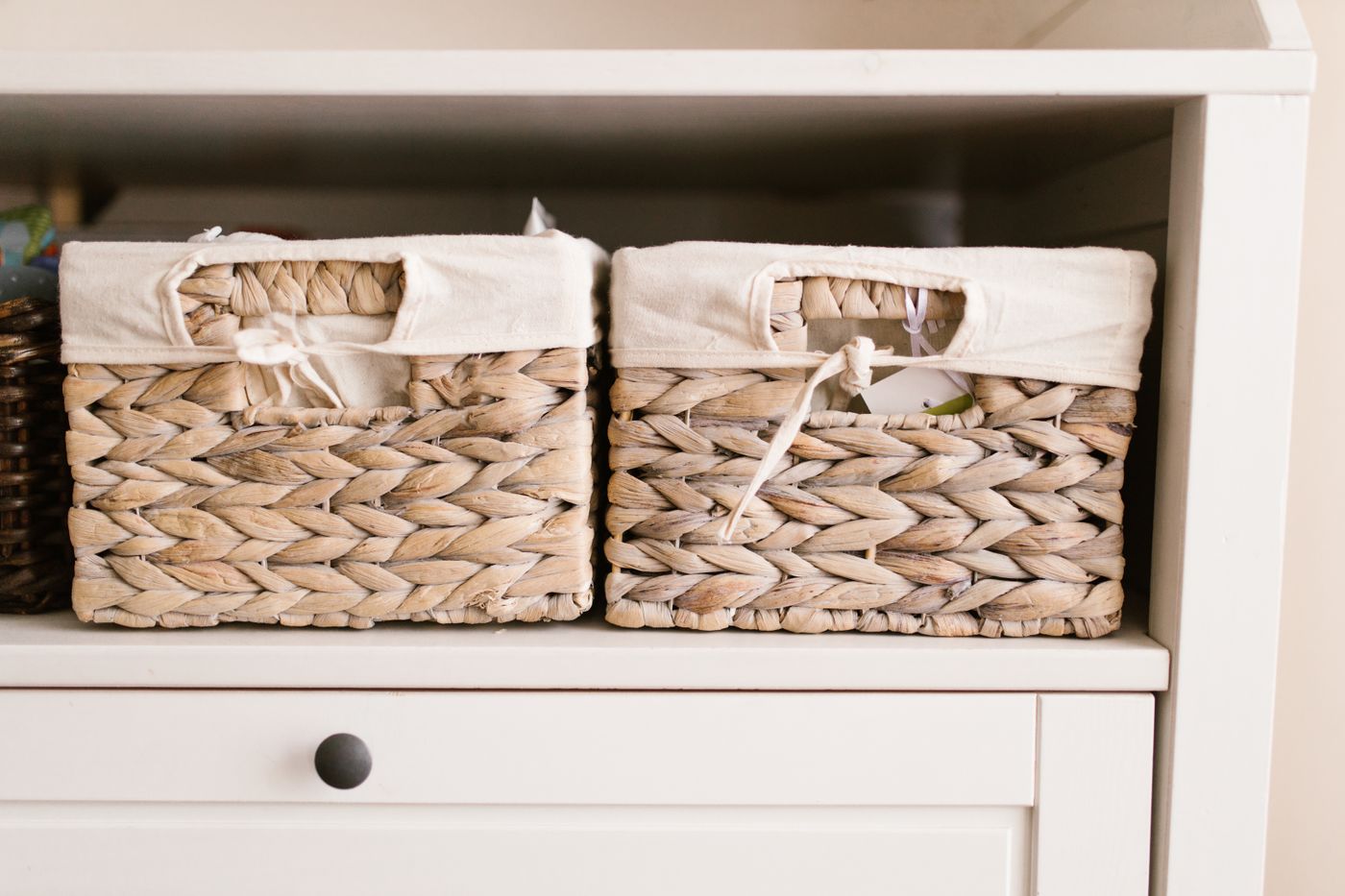
Balance storage capacity with easy handling.
For baskets and bins, include handles and allow room for your hands. High shelves need extra pull-down and lift-out clearance.
- Include the full handle width.
- Leave room to angle baskets out.
- Protect space around hanging garments.
Use the product type to decide what extra space matters.
| Storage type | Measure first | Allow for | Practical note |
|---|---|---|---|
| Drawer dividers | Inside width, depth, and height | Drawer taper, screws, and side hardware | Measure where the divider will sit, not across the top outer edge. |
| Stackable bins | Full stacked height and footprint | Lid removal and access to lower bins | Keep frequently used items in the easiest layer to reach. |
| Shelf risers | Shelf width, depth, and open height | Items placed above and below the riser | Check that both levels remain visible and comfortable to access. |
| Under-bed storage | Floor-to-frame height and clear floor depth | Casters, center supports, rug edges, and handles | Measure at the lowest point under the bed frame. |
| Under-sink organizers | Cabinet opening and internal clear zones | Pipes, disposal units, valves, and door hinges | Sketch the obstacle locations so each organizer has a clear footprint. |

The best fit leaves enough room for real life.
A container can technically fit and still be difficult to use. Before choosing, imagine the complete motion: reaching, lifting, sliding, refilling, cleaning, and returning the item to its place.
Clear answers before you choose.
Small measurement decisions can make everyday storage noticeably easier to use.
Should I choose an organizer with the exact same dimensions as the space?
What should I do when the front and back measurements are different?
How do I measure around plumbing under a sink?
How much room should I leave above a basket?
Should product measurements include handles and lids?
Need a second look at your measurements?
Share the storage location, inside dimensions, nearby obstacles, and the type of items you plan to organize. ZenHaven support can help you think through the practical details before you browse.
- Shipping time
- 3–5 business days
- info@zenhaven.mom
- Phone
- (617) 852-9483
- Address
- 124 GRANDVIEW AVE, West Springfield, MA 01089